
Why Crayola is Trending in 2026
You will have probably encountered an avalanche of nostalgic content about Crayola crayons on social media or a search engine, in case you have opened it recently. Recent Google Trends data shows that a significant increase in interest in “craft trends” and “craft supplies 2026” has been spurred by a new wave of interest in art therapy and sustainable products among adults.
Crayola, in a way, has been a cultural artifact; more than 120 years it has not been merely a child tool. Since the early 1903 nickel box through to the emergence of environmentally friendly materials in the current times, the history of Crayola is the history of contemporary packaging and color technology.
The Birth of an Icon (1903)
In 1903 the world of color was transformed forever. The first crayons were introduced by cousins Edwin Binney and C. Harold Smith in the form of Crayola. This was named by Alice Binney, the French chalk (craie) plus oleaginous (oily) ola.
The First Box:
Price: A nickel ($0.05).
Color (8 Count): Red, Orange, Yellow, green, blue, violet, brown and black.
Packaging: Original packaging was plain with a St. Louis World Expo 1904 Gold Medal, which was a seal used on packaging until 1954.
The Golden Age of Colors (1903 – 1990)
The color name can be the key in determining the Age of a Crayola crayon. Numerous colors have been discarded, re-named, or given depending on changes in the society.
The 8 Original vs. The 64 King
- 1903-1935: The range was gradually extended with such colors as Raw Umber and Maize.
- 949: 48-count box came as the post-war boom in art education.
- 1958: The legendary 64-count box was introduced. Most innovative feature? The sharpener that is built in the back of the box. The design is among the most well-known works of packaging of the past.
The Retired Colours (Hall of Fame)
In 1990, Crayola organized a funeral of eight colors to accommodate brighter and modern colors. The “Retired Eight” included:
- Maize
- Lemon Yellow
- Blue Gray
- Violet Blue
- Green Blue
- Orange Red
- Orange Yellow
- Raw Umber
These colors are currently very collectible. When you come upon an old box of Maize or Raw Umber in good condition, its value is much higher than a new box.
Color Renames: Social Progress
Flesh (1949) → Peach (1962): Modified to be more inclusive in the Civil Rights Movement.
Indian Red (1958) → Chestnut (1999): renamed so not to cause confusion with the color of the skin; the name was simply the name of an Indian pigment.
The Kraft Box Trend in Crayon Industry
Although the goods themselves in the box are the same, the box is the new rave in the packaging industry.
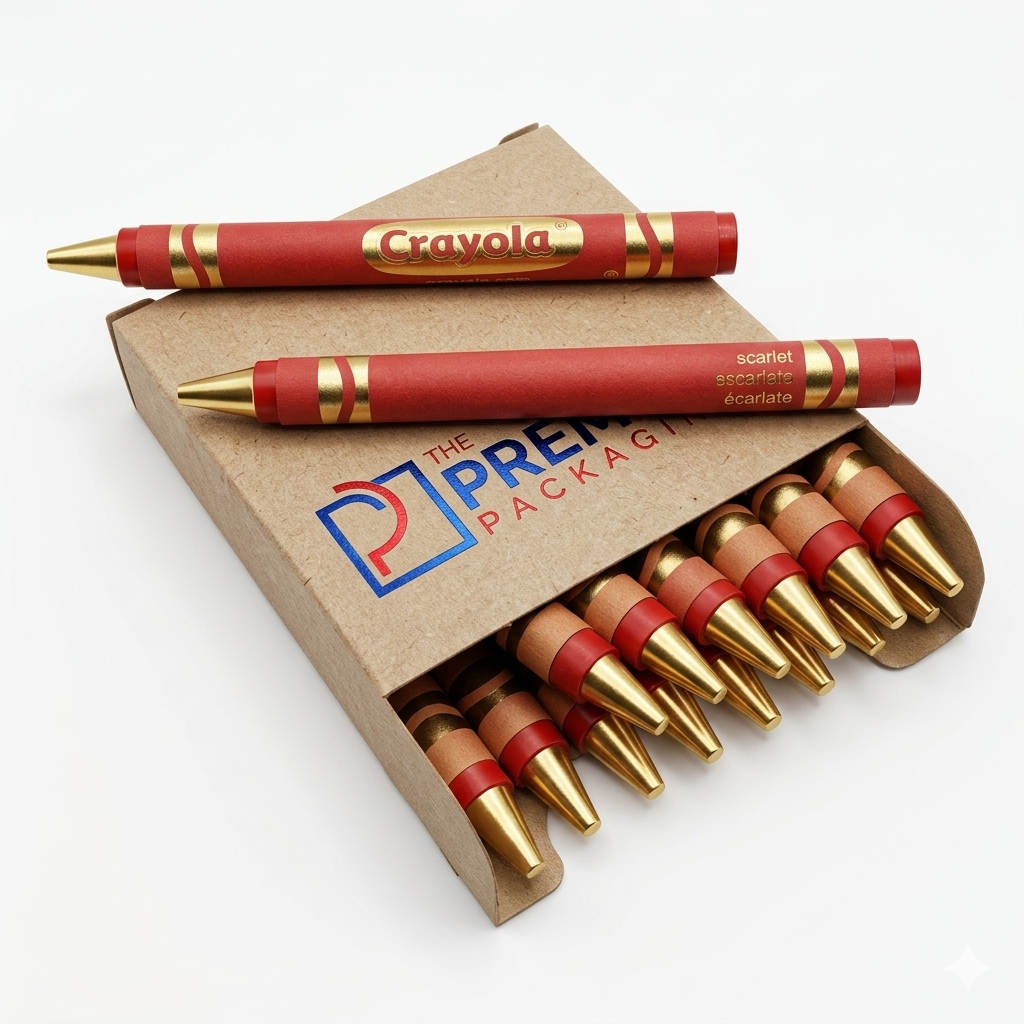
The iconic yellow and green “Gold Medal” design was the standard Crayola box that was used decades. Nowadays, however, there is a giant movement in the direction of rustic and sustainable aesthetics. This is where Custom Kraft paper packaging comes in.
A shift is underway to glossy, plastic-laden, clamshells in the art supplies industry. They are turning to bespoke Kraft packaging boxes as a way of positioning themselves to meet the green ethos of contemporary artists and parents. These boxes offer:
Sustainability: 100 percent recyclable, 100 percent biodegradable, as non-toxic in the crayons it contains as it claims.
Aesthetic: Kraft paper has a rough, natural appearance, which reminds us of vintage, back-to-basics, which appeals to the cottage core and nostalgia trend on TikTok and Instagram.
Customization: The current printing technique can be done in bright, geometric designs on the rugged kraft surface to give a breathtaking contrast between the natural box and the bright wax sticks.
Be it a 6-pack promotion giveaway or a deluxe 120-pack artist set, Kraft paper packaging boxes are shaping the future image of the industry and are showing that what the crayon is in, is just as important as the crayon itself.
Vintage Value & Collecting (2025 Update)
The price tag depends on the Age of a crayon box. The value has exploded over the recent years, according to collecting experts and websites such as AbeBooks and Country Living, as Millennials are in search of nostalgia.
Current Estimated Values (2024-2025):
· Original 1903 Box (Mint): Up to $500 (Extremely rare).
· 24-Count Box Box (Arched Logo): 1950s 24-Count Box – 20 to 75 (retirement status).
· 1958 64-Count Box w/ Sharpener: $30 – $60 (Good condition).
· 1990s “Retired Colors” Tin: $25 – $40.
Stamp: The appearance of the logo of the Gold Medal on the front of a pre-1950s box is the main age marker.
The Modern Age (1998 – Today)
Crayola keeps on innovating to remain relevant.
1. 1998: The 96-piece box came up with colors with kid names including Macaroni and Cheese and Razzmatazz.
2. In 2020s: It has shifted to the emphasis on the Colors of the World (skin tones) and recycling initiatives.
3. The Crayola Factory: It is situated in Easton, PA, it is a leading tourist destination, where the magic of the crayon manufacturing is automated.
Conclusion: Why It Matters Now
The buzz surrounding the “Crayola” is not only on the wax; it is on the packaging. According to Google statistics, people are asking Google about craft trends 2026 and sustainable packaging solutions.
Since the beginning of the Gold Medal box on the back, with the current trend of shifting to the custom Kraft boxes, the industry is hugging itself with the cozy and comfortable feel of the past, and into the sustainable future. The Age of Crayola is a tribute to classic design whether you are a collector on a vintage box priced at $500 or a parent purchasing supplies to take to school.