
Introduction
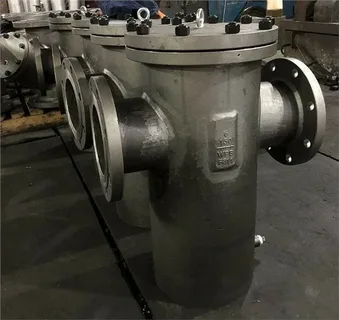
Walk into almost any industrial facility and it doesn’t take long to notice how much effort goes into protecting machines, pipelines, pumps, and anything that deals with fluid. But surprisingly, a very small and often ignored component ends up preventing a lot of breakdowns and service interruptions — a basket strainer India unit. People working in procurement or plant operations already know that blocked lines, choked pumps, and damaged valves don’t always come from big problems; it’s usually the tiny debris nobody thought about.
So, choosing a basket strainer is not just ticking a box in the BOQ list. The type, build, size, rating, basket design, and ease of maintenance can influence not only the cost of ownership but also how often technicians get pulled out of their desks to clean and restart something that shouldn’t have gone wrong in the first place.
Understanding What a Basket Strainer Really Does (Practical View)
A basket strainer doesn’t “purify” fluid like a high-precision filter. It’s more like a practical, first-line shield that catches larger debris before it messes up expensive components. In many Indian industries — cooling water systems, process lines, chemical transfer, boiler feed circuits, raw water pumping, condensate return — the fluid is never 100% clean, no matter what the paperwork claims. Rust flakes, sand, metal chips from welding, scale, thread tape fragments, and even small plant residue can show up inside the line.
When that happens, expensive assets face erosion, cavitation, premature wear, seal damage, and pressure inconsistency. Installing a basket strainer India at the right location helps you sleep better because the line remains safer, the pump curve stays closer to its design performance, and the unplanned shut-downs reduce drastically.
What Actually Makes a Good Basket Strainer (Not Just Marketing Words)
Here are the real-world points that matter more than glossy brochures:
- Filtration area is more valuable than the size of the inlet
You’ll find two 4-inch strainers sold at completely different prices. One might have a taller, wider, deeper basket with more perforation, meaning it clogs slower and the pressure drop stays low for longer. That’s the one worth paying extra for.
- Flow vs. pressure drop curve actually matters
Many buyers forget to ask for this. If the internal path is poorly designed, the strainer becomes a flow-restricting choke point. Over time, the pump compensates, consumes more energy and eventually fatigue sets in. A good manufacturer usually shares approximate performance behaviour.
- Material selection needs logic, not habit
Mild steel is cheaper and common, but if the fluid has chlorides, high temperature, or chemical traces, MS becomes a maintenance headache. For neutral or treated water, MS is fine. For corrosive or hygiene-centric applications, SS304 or SS316 makes more long-term sense. Duplex or exotic alloys only when truly necessary.
- Maintenance design is a big deal
The real difference between a good and bad unit is how easy it is to open, clean, reseal and restart. Swing bolt lids, hinged covers, davit options, and drain ports make technicians’ lives much easier. Don’t underestimate this part.
- Sealing quality can save thousands
Poor gasket seats, uneven machining or improper surface finish can lead to micro-leaks that turn into macro-leaks. Once a plant gets a reputation for “line dripping here and there,” it’s hard to reverse.
Types of Basket Strainers Used in Indian Plants (From Experience)
There are mainly two practical setups used widely:
Simplex (single basket) — fluid must stop for cleaning. Works fine for non-critical pipelines or where downtime is part of routine maintenance.
Duplex (dual basket) — no shutdown required because the flow diverts while one basket is removed or serviced. Ideal for chemical, refinery, energy, high-flow cooling water systems, multi-shift plants, or any line where nobody wants production to pause.
If the purchase team plans only on initial price, they end up selecting simplex even for plants that run 24×7 — but after one or two shutdown incidents, management regrets the savings.
Actual Cost Behaviour in the Market
The pricing of basket strainer India units varies heavily. There isn’t a standard “universal price card” because there are too many variables. Based on general purchasing patterns across Indian industrial zones, cost typically swings according to these points:
| Factor | How it Impacts Price |
| Size (NB size) | Bigger = more expensive |
| Pressure rating | 150# < 300# < 600# |
| Material | MS < CS < SS304 < SS316 < Duplex |
| Basket type | Perforated < Mesh < Wedge-wire |
| Type | Simplex < Duplex |
| Add-ons | Davit, quick-open, drain ports, accessories |
Broadly, smaller simplex strainers for standard water duty stay in the lower range, whereas large duplex SS units for heavy-duty continuous lines can go several times costlier. And if someone wants a special alloy, expect a steep jump.
Common Mistakes Buyers Make (Seen Too Often)
These mistakes are surprisingly repeat-patterned in many plants:
- Choosing “fine mesh” even when not required (clogs too fast)
- Selecting material based on price instead of fluid chemistry
- No check on basket volume vs flow rate
- No talk about future spares and availability
- Installing too far from maintenance space
- Ignoring the drain option
- Buying from fabricators who don’t test pressure integrity properly
Sometimes it’s not the strainer that disappoints — it’s the buying decision.
Quick Practical Checklist Before Finalizing
Here’s a simple sanity-check approach that reduces wrong buys drastically:
✔ Define expected contamination and approximate particle size
✔ Know system pressure & temperature properly
✔ Confirm whether shutdown is tolerable or not
✔ Pick material logically, not emotionally
✔ Always ask for drawings or dimensional sketch
✔ Check how easy it is to open and reseal
✔ Ensure future baskets are easily procurable
✔ Confirm gasket type and body finishing
A basket strainer India unit, if selected thoughtfully, quietly works for years without anyone even remembering who supplied it — and that is actually the best compliment it can get.
Closing Line
A basket strainer is not a flashy purchase, but it plays a silent leader’s role in protecting multiple expensive components. When selected with the right balance of performance, practicality, and maintainability, it delivers long-term peace of mind that no amount of last-minute firefighting can replace.