
A doll can become a friend, character, family member, hero, teacher, explorer, or magical figure during pretend play. Different doll styles support different types of stories, allowing children to create scenes based on imagination and everyday experiences. From baby dolls and fashion dolls to character dolls and role-play figures, each type can encourage creative thinking in a unique way. Pretend play also provides opportunities to explore emotions, communication, cooperation, and problem-solving. A thoughtfully selected doll can become part of countless imaginative adventures, making playtime more engaging while supporting important developmental skills.
Baby Dolls for Caring and Family Stories
Baby dolls are ideal for pretend play based on caregiving and family routines. Children can create stories involving feeding, bathing, dressing, bedtime, and going for walks. Simple accessories such as bottles, blankets, clothes, and toy strollers can add realism to these scenes.
Caregiving play can also introduce ideas about kindness, responsibility, patience, and empathy. A baby doll gives children a safe setting for copying familiar routines and creating original family stories.
Fashion Dolls for Creative Character Play
Fashion dolls provide many possibilities for storytelling because clothing and accessories can help create different characters and settings. A doll may become a student, artist, athlete, traveler, chef, or performer depending on the story.
Changing outfits can also encourage creativity. Different clothing combinations can represent different events, seasons, occupations, or personalities. Simple props such as bags, books, furniture, and miniature food can make imaginative scenes more detailed.
Character Dolls for Fantasy Adventures
Character dolls are suitable for stories filled with fantasy, adventure, and excitement. A character may become a princess exploring an enchanted castle, an adventurer searching for hidden treasure, or a hero protecting a fictional kingdom.
Fantasy play encourages children to build imaginary worlds with characters, locations, challenges, and solutions. Several dolls can also become part of the same story, creating opportunities for dialogue and cooperative play.
Dolls for Everyday Pretend Play
Everyday role-play can turn ordinary routines into imaginative stories. A doll can become a student attending school, a customer visiting a shop, a patient at a pretend clinic, or a passenger preparing for a journey.
This type of play can help children understand familiar social situations. Pretend conversations allow practice with greetings, requests, questions, and emotional expression. Everyday scenarios can also introduce concepts such as sharing, taking turns, helping others, and solving small problems.
Dolls for Storytelling With Friends
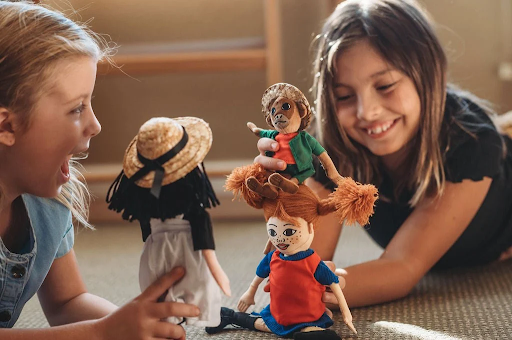
Group storytelling becomes more engaging when several characters are available. Each child can control a different doll and contribute ideas to the same storyline. One character might start an adventure while another introduces a challenge or unexpected event.
This style of play supports communication and cooperation. Children can learn to listen to different ideas, respond to changing situations, and develop stories together. Even simple dolls can become useful storytelling tools when imagination provides the setting.
Dolls With Accessories and Play Sets
Accessories can expand the possibilities of pretend play. Doll houses, beds, kitchens, vehicles, clothing sets, bags, furniture, and miniature animals can create more detailed environments.
Accessories do not need to be extensive. A blanket can become a picnic area, a cardboard box can become a shop, and a small table can become a classroom. Open-ended materials often encourage children to create their own solutions rather than follow a fixed storyline.
Dolls That Support Open-Ended Imagination
Open-ended play works best when a doll can fit into many different stories. A character without a strictly defined role may become anything from a doctor to a space explorer. This flexibility gives children greater control over the direction of play.
Simple designs can sometimes encourage more imagination because fewer details determine the character’s identity. Children can create names, personalities, backgrounds, relationships, and adventures independently.
How to Select a Doll for Pretend Play
Age suitability, durability, size, materials, and play interests are useful factors when selecting a doll. A lightweight design can be easier for smaller children to handle, while older children may enjoy dolls with detailed clothing, movable features, or larger accessory collections.
The intended type of play also matters. A baby doll may suit caregiving stories, while a fashion doll may support character development and outfit-based storytelling. For fantasy adventures, character dolls with imaginative themes may provide greater storytelling potential.
Simple Ways to Expand Doll Storytelling
A few simple prompts can create completely different adventures. A story might begin with a doll preparing for school, planning a birthday party, visiting a new place, helping a friend, or discovering a mysterious object.
Story cards, homemade furniture, paper clothing, drawings, and recycled boxes can also add variety. Changing the setting regularly keeps familiar dolls interesting and encourages fresh ideas. Adult participation can involve asking open-ended questions without controlling the storyline.
Why Pretend Play Matters
Pretend play is more than entertainment. Storytelling with dolls can support language development, creativity, emotional expression, social skills, and basic problem-solving. Children can experiment with different situations and explore possible responses in a comfortable play environment.
Repeated storytelling can also strengthen narrative skills. Characters need goals, actions, challenges, and outcomes, giving children natural practice in building sequences and connecting ideas. Different types of dolls make this process more varied and engaging.
Bachaa Party: A Place for Imaginative Doll Play
Bachaa Party adds value to pretend play by providing access to toys and play essentials designed for different interests and stages of childhood. A varied selection of dolls can support caregiving stories, fashion-based adventures, fantasy worlds, and everyday role-play. Accessories and complementary toys can further expand storytelling possibilities. A suitable doll does not need to create a fixed type of play; open-ended choices allow imagination to guide each story. Bachaa Party can therefore serve as a convenient destination for families seeking play options that encourage creativity, storytelling, social interaction, and enjoyable learning through imaginative activities.